Not a blog
Standing in Someone’s Corner
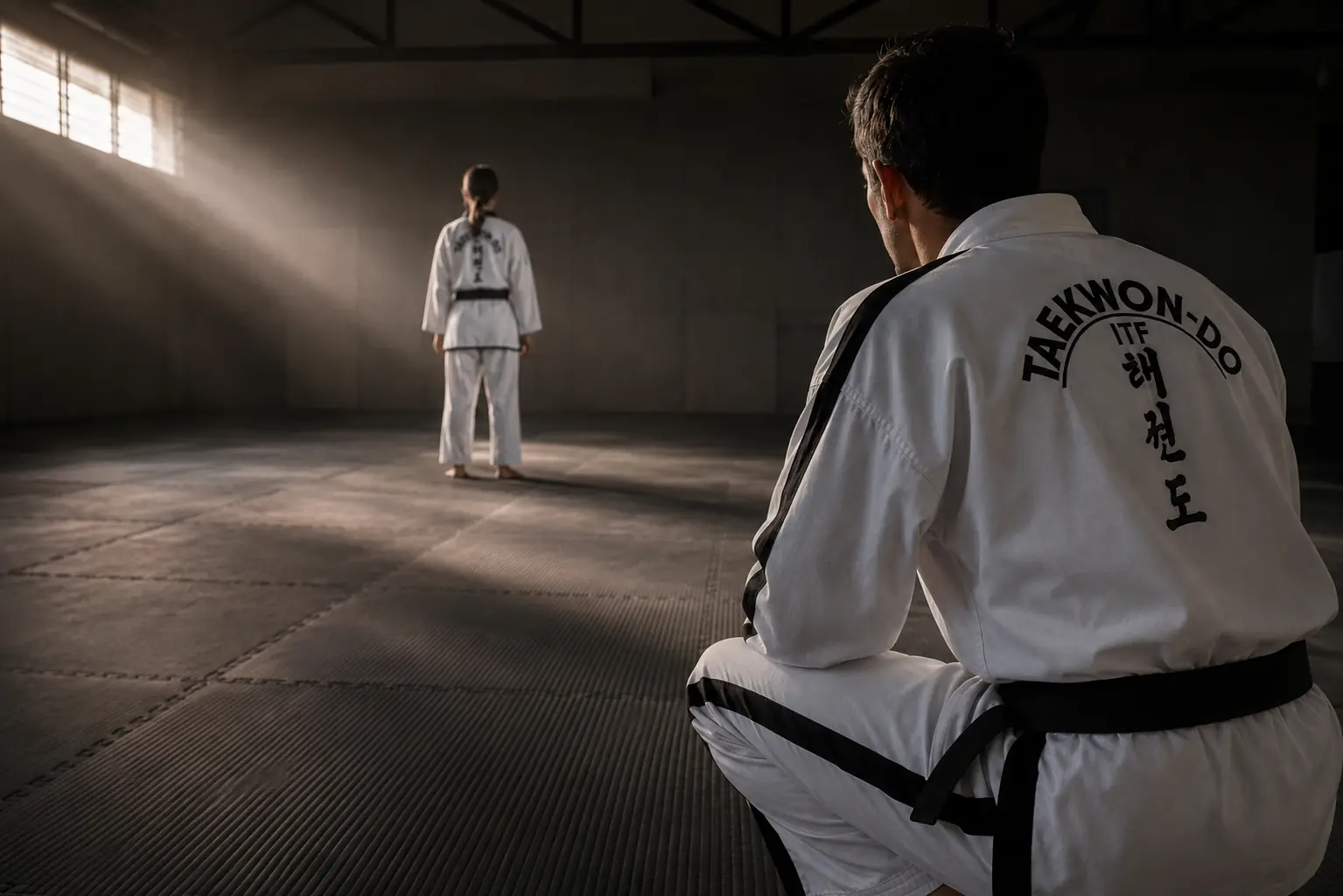
Supporting someone is not about fighting their battle for them. It is about helping them stand more firmly when they have to face it themselves.
On a competition mat, the roles are clear.
The athlete steps in. The coach stays at the edge.
You are close enough to see, but too far away to do it for them.
Lately, I have been thinking a great deal about this particular role. As a coach, I can plan, analyse, correct and encourage. I can see an opening the athlete cannot see, notice that their rhythm is slipping, or understand that nerves have begun to take up more space than technique. I can give brief instructions from the edge.
But I cannot step in and perform a single movement for them.
The match belongs to the athlete.
That is not just a rule in sport. It is also a fairly precise description of life.
Helping without taking over
When we care about someone, we often want to remove whatever is difficult. We want to give them the answer, make the decision, solve the problem and spare them from failing.
It feels helpful. Sometimes it is.
But not always.
If you take over every time someone struggles, you may help them through the moment, but at the same time you leave them less prepared for the next one. Control does not become care simply because it is well-intentioned.
A coach who has an answer for everything can seem capable. But if the athlete freezes the moment the voice from the edge disappears, we have created dependence—not mastery.
A good coach should not make themselves necessary. A good coach should make the athlete more independent.
The same applies to teaching.
When a child is learning a new Taekwon-Do technique, I can often see many things that should be corrected: the stance, balance, height, direction, focus and timing. Every observation may be correct. But if I list everything at once, I have probably not taught particularly well.
I have merely demonstrated that I see more than the child does.
Good teaching is about finding the correction the student is ready for right now.
The rest can come later.
Support is more than applause
Standing in someone’s corner does not mean agreeing with everything they do.
It is easy to call yourself supportive when support only means clapping, smiling and saying, “Good job.” But sometimes the most loyal thing you can do is say that the effort is not good enough, that the plan is not working, or that the person is beginning to deceive themselves.
Encouragement without honesty is cheap.
At the same time, honesty without care is simply brutality. It is no great achievement to point out every fault to someone who already knows they are struggling.
The real task is to say what needs to be said in a way that makes the other person better able to move forward.
Some people need to be fired up. Others need to be calmed down. Some must be challenged. Others need to hear that it is all right to be nervous. What lifts one athlete may place even more pressure on another.
That is why coaching is not only about knowing the sport.
It is about reading a person under pressure.
When you have to let go
As an instructor, I can prepare. As a coach, I can analyse. As a father, I can protect and guide. As a friend, I can listen and offer advice.
But sooner or later, the moment comes when the other person has to step in alone.
The student must perform the pattern. The athlete must fight the match. The child must make a choice. The friend must live with their decision.
At that point, it does not matter that I would have preferred them to do things differently.
Standing in someone’s corner means accepting that they will not always follow your advice. It also means accepting that they may make mistakes you perhaps saw coming.
That is difficult, because we often confuse being needed with being valuable. We like the feeling that someone needs us. But the goal of good guidance is not to make yourself indispensable.
The goal is to help another person stand more securely on their own feet.
The best help makes the recipient freer, not more dependent.
Who is in your corner?
No one gets very far alone.
Even the most experienced athlete needs someone who can see the match from another angle. Someone who notices what they cannot see themselves. Someone who reminds them of the plan when their pulse rises and their view begins to narrow.
We need the same thing in life.
We need people who cheer us on, but also people who dare to correct us. People who do not disappear when the result is poor. People who can remain close without taking over.
Think about who stands in your corner.
And perhaps even more importantly:
Who has you in theirs?
Not so that you can fight their battle. Not so that you can control the outcome. Not so that you can take the credit when things go well.
But so that you can be there. See clearly. Say what matters. And remain when things become difficult.
Stand in their corner.
But let them own the mat.
Øyvind Nyborg